The short answer
Home-based business insurance fills the gaps a home policy leaves when you earn money where you live. Home policies often cap business equipment at a small amount and exclude business liability, stock, and clients injured on the property. Depending on the work, the answer may be an endorsement on the home policy or a separate business package. A licensed broker looks at what you do, keep and offer before matching cover to it.
- Freelancers, consultants and virtual assistants working from a home office
- Online sellers storing stock in a basement, garage or spare room
- Tutors, music teachers, stylists and therapists who see clients at home
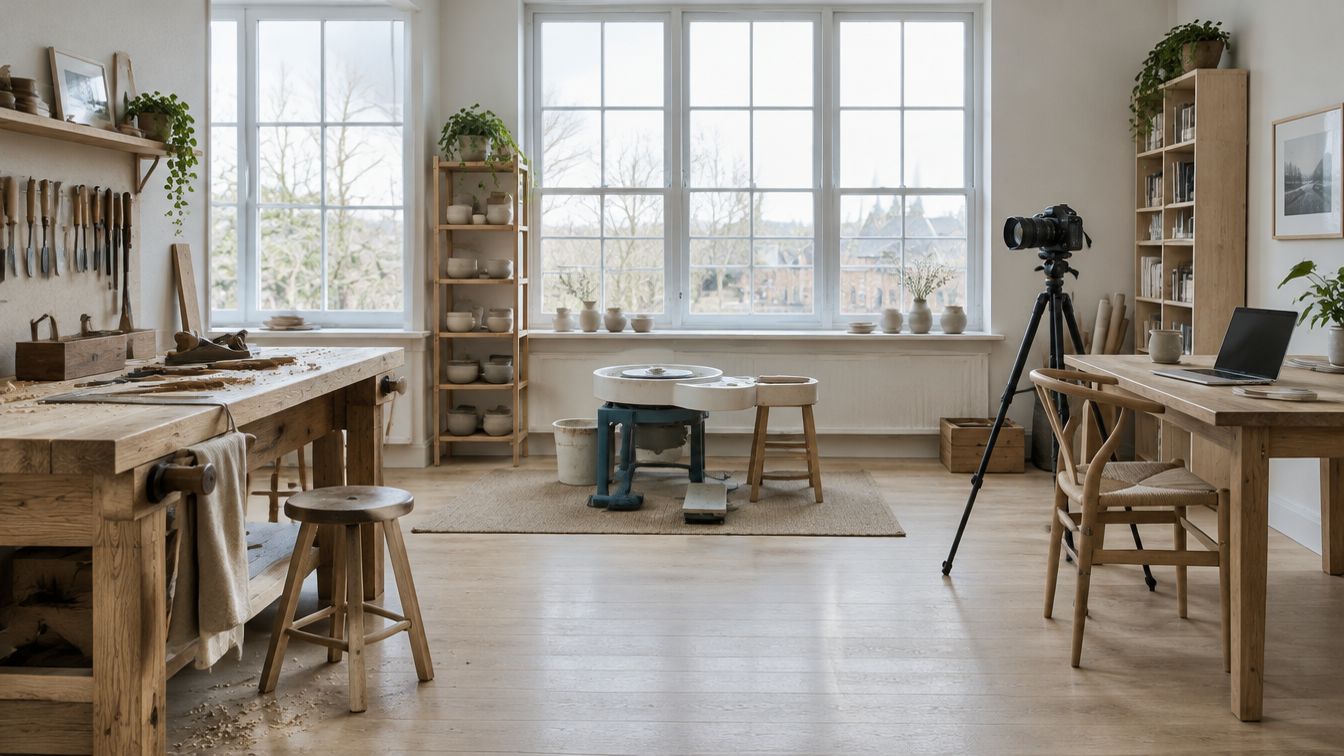
- Makers and trades running a workshop or studio on the property
- Anyone starting a side business who has not told the home insurer
3 licensed brokers in the network handle this. In Alberta, Canada, a request for home-based business insurance can be offered to up to three of them, chosen because they are licensed for this line and place. They are test brokers while we are in demo.
See the brokers → Outside Alberta, Canada you can prepare and save a request today; sending opens place by place. Brokers answer with their own quotes. Broker.insure does not quote, advise or take commission.
01 / What it covers
The parts worth understanding
Business equipment at home
Computers, tools, specialised machines and furniture bought for the work. Home policies commonly limit these to a small amount or exclude them, so total what you actually own.
Stock and materials
Inventory waiting to ship, supplies and finished goods. Ask whether it is covered at cost or at selling price, and whether it counts while it sits in a vehicle or at a market stall.
Business liability
Claims that a client, courier or customer was hurt on your property, or that something you did for a customer caused damage. A home policy's personal liability usually stops where business activity begins.
Products you make or sell
Injuries or damage caused by goods after they leave your hands. Food, cosmetics, children's items and anything worn on the body tend to draw closer questions from insurers.
Professional errors
For advice, design, bookkeeping or other services, claims that your work was wrong or late and cost a client money. This is separate from injury and property liability.
Lost business income
Income you lose after a covered fire or flood makes the home office or workshop unusable. It is rarely part of a home policy and is usually tied to a business package.
Data and devices
Costs after a lost laptop holding client information or a hacked email account used for invoices. Relevant once you keep client records of any kind.
02 / Get ready
Bring this, and expect these questions
Gather
- A plain description of the work, including anything you do only now and then
- Whether clients, customers, students or couriers come to the home, and how often
- A list of business equipment with rough replacement values and purchase dates
- Stock you keep at home: what it is, where it is stored and its total cost
- Annual revenue, actual or estimated, and the number of people who work with you
- Any employees, helpers or contractors who work at the house
- Client contracts, platform terms or professional rules that ask for proof of cover
- Your home or tenant policy wording, especially the sections on business use
- Whether you use a personal vehicle for deliveries, supplies or client visits
- Any municipal home occupation permit or business licence you hold
A broker will ask
- What does the business do, in a sentence a customer would recognise?
- Which rooms or buildings on the property are used for the work?
- Do clients or customers visit, and what do they do while they are there?
- What equipment and stock is kept at home, and what would it take to replace it?
- Do you make, sell or modify products, and where are they sold?
- Do you give advice or deliver a service someone relies on?
- Does anyone besides you work in the home, paid or unpaid?
- Do you hold client information on a laptop, phone or cloud account?
- Has your home insurer been told about the business?
Not sure of an answer? Leave it. "Not known yet" is a fine answer, and a broker will help you fill it in.
03 / Build your request
Answer a few questions. Get your own list.
Pick what fits. Your answers shape the list beside them, and they are saved to your request as plain facts a broker can read. "Not sure yet" is always a fine answer.
04 / Three situations
See which one sounds like yours
A candle maker selling online from her basement
She pours candles in her basement, keeps several hundred finished jars on shelving and ships orders through an online store and a weekend market. Her home policy has never been told about the business.
First steps. Tell the broker about the melting wax, the open flame testing and the stored stock, since those are the details an insurer will focus on. Bring the cost of your inventory, the market's insurance requirement and a list of where you sell, and ask how product liability and stock in transit fit together.
A piano teacher with students in the living room
A retired musician teaches about a dozen students a week in his living room, including young children who arrive with parents. A parent recently tripped on his front steps in the dark; nobody was hurt, but it made him wonder.
First steps. Ask your home insurer in writing whether visiting students fall under personal liability, and keep the reply. Bring the number of students, the teaching hours and the layout of the entrance to a broker, and ask whether an endorsement or a separate policy suits the teaching.
A virtual assistant handling client files
A virtual assistant manages calendars, invoices and email for five small-business clients from her home office. One new client's contract asks for proof of professional liability and cyber cover before work begins.
First steps. Send the broker the contract's insurance clause word for word, along with a description of your tasks and the client data you can reach. Ask how errors cover and cyber cover would respond if a misdirected payment or a breach started on your laptop.
05 / Words you will hear
The jargon, in plain words
- Business use exclusion
- Wording in a home or auto policy that removes cover for activities carried out to earn income. It is the clause that most often surprises people working from home.
- Property off premises
- Cover for business items while they are away from the insured address, such as a laptop at a client's office or stock at a weekend market.
- Products liability
- Protection against claims that something you made, sold or repackaged injured someone or damaged their property after it left your hands.
- Errors and omissions
- Cover for claims that advice or a service you provided was wrong, incomplete or late and caused a client a financial loss.
- Home occupation permit
- A municipal approval some cities require before a business operates from a residence. Its conditions can cover visitors, parking, signs and employees.
06 / Common mistakes
What trips people up
- Assuming the home policy's contents cover extends to a laptop and printer used for paid work.
- Letting customers or students visit without checking whether personal liability applies to them.
- Storing inventory at home without knowing whether a policy would value it at cost or at selling price.
- Forgetting to mention the business when a renovation, a move or a new hire changes the picture.
- Using a personal vehicle for deliveries or client visits without telling the auto insurer.
- Running a home daycare, salon or food business under an ordinary home policy.
Ready when you are
Turn this into one clear request.
Save it, add what you know, and choose when to send it. A licensed broker who handles home-based business insurance takes it from there.
07 / Questions people ask
Straight answers
Is my home business covered by my home insurance?
Usually only in part, if at all. Many home policies place a small cap on business property, exclude stock, and exclude liability arising from business activities, including injuries to clients who visit. The exact wording differs between insurers. Read the business-use sections of your policy, ask the insurer in writing what applies, and bring the answer to a broker.
What is a home-based business endorsement?
It is an addition to a home policy that extends some cover to a small business run from the home, such as a higher limit for business equipment and liability for limited client visits. Insurers set conditions on the type of work, the revenue and the number of visitors. Larger or riskier operations are usually moved to a separate business policy.
Do I need insurance if I only sell online?
Selling online does not remove the risks of stock stored at home or of products that cause harm after they are delivered. Some marketplaces and payment platforms also ask sellers to carry liability cover once sales pass a certain level. Bring a description of what you sell and where, and a broker can explain which parts matter for that product.
Is my equipment covered when I take it out of the house?
Only if the policy includes property away from the premises, sometimes arranged as equipment floater cover. Laptops carried to client meetings, cameras taken to shoots and stock taken to a market can all fall outside cover limited to the home address. List what leaves the house and how often, and ask the broker how each item is treated.
Do I need permission from the city to run a business from home?
Many municipalities, including Calgary and Edmonton, have rules for home-based businesses, and some require a licence or a development permit depending on client visits, signage, employees and parking. Rules change, so check your own municipality's current requirements. A broker may ask whether you hold a licence, and the answer can shape which policies fit.
Is my car covered when I use it for the business?
Personal auto policies are rated for the use you describe, such as commuting or pleasure. Regular deliveries, client visits or carrying tools and stock may count as business use. Tell your auto insurer or broker how the vehicle is used for the work, since a mismatch between the stated use and the actual use can complicate a claim.
Specialists
Sites for a specific line of work
General information, not insurance advice. Broker.insure is a directory and request service: it is not an insurer and does not quote, bind or advise. Policy terms, availability and what is required where you live depend on your situation and on licensed professionals. Updated 2026-10-31.